Showing posts with label Evidence Foundation. Show all posts

Thursday, January 8, 2026

Fall 2025 Scholars Propose Innovative Projects in Cancer Care and Global GRADE Dissemination

Recently, the U.S. GRADE Network and Evidence Foundation had the privilege of welcoming three new scholars to the fall 2025 virtual GRADE Guideline Development Workshop. Scholars hailed from around the world, from the U.S. to Pakistan and Germany. 

Alexander Brooks, a Ph.D. candidate in exercise science at the University of South Carolina, presented a systematic review project in development to assess the long-term effectiveness of exercise interventions in cancer survivors. "Despite the growing number of clinical trials and guidelines in this area," says Brooks, "few systematic reviews have applied structured approaches to assess the certainty of the evidence underpinning these collective recommendations." Brooks' project directly addresses this gap in the literature while examining the trajectory of health and fitness markers in this population in the short- and long-term period after cancer treatment.

Attending the GRADE workshop "strengthened my ability to critically evaluate research and better understand how evidence is synthesized to inform recommendations," said Brooks. "The hands-on exercises were particularly valuable, and I found the workshop directly applicable to my own work."


Dr. Anna-Sophie Strauss, a resident physician at University Hospital Ulm in Germany and a Cochrane Urology review author, discussed her current review of the diagnostic test accuracy of prostate-specific membrane antigen (PSMA) imaging for the staging of primary prostate cancer. The aim of this review is to inform evidence-based guidelines for this testing strategy, ultimately "supporting more informed and unbiased decision-making in urological healthcare."

"Taking part in the GRADE Guideline Development Workshop improved my understanding of how structured evidence appraisal can be used to create transparent, patient-centered recommendations," said Strauss. "I also appreciated the opportunity to exchange global perspectives, which demonstrated how rigorous methods such as GRADE can be adapted to different clinical and health system contexts." 

Finally, Dr. Muhammad Tayyab Qureshi presented from Pakistan. A House Officer in the Pakistan Air Force Hospital Islamabad, Dr. Qureshi discussed the need for the dissemination of locally relevant guidelines in Lower- and Middle-Income Countries such as Pakistan. These efforts, he believes, will strengthen "health systems through practical, evidence-informed solutions that lead to measurable improvements in health outcomes and resource use."

The training provided in the three-day GRADE workshop will allow the scholars to apply the GRADE framework to the certainty and evidence assessment and formulation of recommendations within their specific projects. 


Interested in becoming a scholar? Applications to join us for the spring 2026 workshop in Kansas City, Missouri, May 18-20, 2026, close Saturday, January 31. See application details at evidencefoundation.org/scholarships.html.

Monday, July 7, 2025

2021 Evidence Foundation Scholar Receives Health Equity Travel Scholarship

The Evidence Foundation is proud to announce that spring 2021 GRADE Workshop Scholar Ifeoluwa Babatunde, Pharm.D, MS, received the 2025 Encoding Health Equity Summit Travel Scholarship for Patients and Emerging Leaders, an opportunity made possible by Doris Duke Foundation and the Council of Medical Specialty Societies (CMSS). 

About her experience at the summit, Babatunde shared,

"The Encoding Equity conference was an enriching experience for me. I found it quite inspiring to hear about the diverse initiatives and research projects geared towards achieving health equity. Hearing from biomedical researchers, clinicians, public health providers, guideline developers, and medical societies truly showcased the depth of work in this field.

"My personal takeaway from the conference was on the power of collaboration. Successfully achieving the central goal of health equity integration would require all stakeholders, from providers & researchers to members of the very communities we aim to impact, actively sharing their perspectives. By engaging in consistent mutual learning, we can inspire innovation and translate our findings to actionable change across the entire medical ecosystem.

"As someone in guideline development, I particularly resonated with the work being done on pioneering a 'Population Conscious Analysis' approach to handling race and ethnicity as a variable in biomedical research. This innovation has me very optimistic about the positive impact it will have on new and existing quality appraisal tools being used in evidence synthesis.

"Lastly, I enjoyed engaging in discussions with poster presenters working on projects closely aligned with that of my team. Specifically, those focused on creating a race-conscious framework for for guideline development. These discussions reinforced the significant impact of the work we are engaged in."

Open the doors to opportunity:

Interested in contributing to the future of evidence-based medicine? Become an Evidence Foundation Scholar and attend our upcoming virtual fall workshop (October 29-31, 2025) for free. Application close August 31, 2025. See evidencefoundation.org/scholarships.html 
for application details.

Thursday, July 3, 2025

Latest Evidence Foundation Scholar Tackles Project to Create New Quality Assessment Tool for Prevalence Studies

Prevalence studies inform understanding of an individual's baseline risk for a medical or health condition as well as the burden of the disease and the characteristics of a given target population. Meanwhile, estimates of the the absolute risk, taken from prevalence data, informs the development of evidence-based guidelines. But how can one tell if the data on prevalence are trustworthy or seriously biased?

There currently exists no widely agreed-upon tool to assess the risk of bias within studies of prevalence analogous to the Cochrane RoB 2.0 tool for randomized controlled trials or QUADAS-2 for studies of diagnostic test accuracy. Additionally, the assessment of a prevalence study comes with its own challenges, as it requires assessment of population selection, condition treatment, and analysis.

Dr. Ali Choaib, a post-doctoral research fellow in the Evidence-based Practice and Impact Center at the University of Kansas Medical Center, discussed this gap and his proposed project to address it as part of his presentation as the spring 2025 Evidence Foundation scholarship recipient.

At the GRADE Guideline Development Workshop held in Arlington, Virginia, last month, Dr. Choaib presented his work in systematically reviewing and thematically analyzing all existing tools to assess risk of bias in prevalence studies. Choaib and his team identified four major conceptual domains shared across the existing tools: study population, sampling, and setting; case/condition definition and measurement; statistical analysis; and other (e.g., conflicts of interest and missing data).

Next, Choaib's team will work to develop and receive iterative feedback on a new tool that assesses all critical domains while taking care not to include items or questions that are not specifically related to bias, such as those assessing reporting quality.

About his experience of the workshop, Choaib said, 

"The workshop was a perfect opportunity to learn, network, and collaborate with experts. Topics were dynamic and sessions tailored to individuals at all stages of the guideline development process from researchers to admins. I’m honored to have received the scholarship and to have contributed to discussions that expanded my knowledge and understanding of the guideline development process overall and with regards to diagnostic test accuracy specifically."


Choaib has additionally received the Encoding Health Equity Summit 2025 Travel Scholarship Program for Patients and Emerging Leaders. This scholarship, which is made possible with support from the Doris Duke Foundation, the Council of Medical Specialty Societies (CMSS), allowed him to attend the 2025 Encoding Health Equity Summit. This year's theme was "From Evidence to Impact."

"Encoding Health Equity Summit was an eye opening  and career influencing experience. Being a scholar and having the opportunity to contribute to the discussion on a novel and noble approach to health equity at a time when it’s needed. The meeting introduced us to other other investigators, administrators, journal editors, and society leaders broadened my perspective and opening the way for new opportunities and collaboration. This meeting has also connected ideas and work from basic science to implementation. It was inspiring to see so many passionate professionals working to advance equity and improve the future of health."

Interested in contributing to the future of evidence-based medicine? Become an Evidence Foundation Scholar and attend our upcoming virtual fall workshop (October 29-31, 2025) for free. Application close August 31, 2025. See evidencefoundation.org/scholarships.html for application details.

Learn more about Ali's project and other ways to get involved with GRADE at our upcoming free webinar, Monday, November 17th. Register to attend at this link.


Wednesday, July 3, 2024

EF Scholar Success Story: Nirjhar Ruth Ghosh

 New publication alert!

Nirjhar Ruth Ghosh, who attended the winter 2022 Systematic Review workshop as an Evidence Foundation scholar, recently published the results of her hard work in The Journal of Nutrition! The project, "Evidence-Based Practice Competencies Among Nutrition Professionals and Students: A Systematic Review" was originally presented by Ghosh to her fellow attendees of the virtual workshop. The results of the systematic review are now able to be read in detail at this link. 

In an accompanying editorial lauding the publication, Francene M. Steinberg wrote that "Ghosh et al. have provided a foundation for further consideration of steps to advance interprofessional competencies in EBP to optimize clinical nutrition decision making and patient care outcomes. Improved clarity about core competencies, innovative EBP curriculum and pedagogic approaches, and more rigorous research evaluations of EBP application and outcomes are all necessary components of the path forward."


Congratulations, Ruth!

Interested in being our next scholar success story? Applications for scholarships to attend our fully virtual GRADE Guideline Development Workshop are now open (deadline: August 31). Learn more at https://evidencefoundation.org/scholarships


=

Tuesday, January 10, 2023

From Risk of Bias to Living Evidence, Fall 2022 EF Scholars Present on Cutting-Edge EBM Projects

During our 17th GRADE Guideline Development Workshop, held virtually, the U.S. GRADE Network had the honor of introducing the three latest recipients of the Evidence Foundation scholarship to the virtual stage. On the third and final morning of the workshop, each scholar presented on their current projects to reduce bias in healthcare and move the field of evidence-based medicine methodology forward. 

Abrar Alshorman, MBBS, presented on her work to examine the tools used to assess risk of bias across various types of evidence. As choosing the wrong risk of bias tool at the start of an evidence synthesis effort might waste time and disrupt workflow, her project aims to guide systematic reviewers in choosing the best tool to use. The resulting list includes risk of bias tools for use in primary studies that were identified in a search of the evidence, including those with applications in randomized, non-randomized, diagnostic test accuracy, prognosis, and qualitative bodies of evidence. 

"The workshop struck the perfect balance between informative and interactive," said Alshorman. "[A]ll sessions have been extremely informative and provided by very knowledgeable presenters. This opportunity offered me insight into the key concepts of the GRADE approach for guideline development. I look forward to incorporating the information I've learned into practice."


Next, Brett Norling, a third-year medical student, discussed his project examining the use of the GRADE framework in systematic reviews in urology. The project reviewed literature published in the top 5 urology journals since 2000, using Perl programming code to identify articles using GRADE. The team then applied a 37-item checklist developed de novo from the "Criteria for Applying or Using GRADE." The results demonstrated that while most (95.8%) of the included reviews correctly applied GRADE on an outcome-level basis, nearly one-third (31.4%) of the 70 reviews summary of findings, evidence profile, or other from of table to present their findings.

"I came to the GRADE Workshop having performed a systematic review and a few other research projects regarding systematic review methodology," said Norling. "I felt that my understanding of GRADE was in the developing stages, though it felt a bit abstract prior to the workshop. Key GRADE principles of evidence assessment came to life as I worked with a small group to assess a body of evidence and arrive at a recommendation. I now feel well equipped to confidently assess evidence and perform systematic reviews with a greater level of autonomy than prior to this workshop."

Finally, Ariadna Alaudell-Rispau, a PhD candidate in the Biomedical Research Methodology and Public Health Doctoral Program at the Autonomous University of Barcelona, presented her proposal for the development of Living Evidence Structures Summaries (LESS). Auladell-Rispau described her project to lead a multi-design, iterative study that allows for a systematic and rigorous development of a "Living Evidence updates reporting model" that "accounts for the periodic and/or constant updates of the evidence syntheses developed under the Living Evidence model, permits the development of valid, reliable, and updated health information to health decision makers, including guideline or [health technology assessment] developers..., [and is] friendly and accessible." The project will include a systematic review, brainstorming meetings, a Delphi consensus process, and finally, testing and assessment of the newly developed model.

We look forward to updating the blog about these projects as they move forward!

ANNOUNCEMENT: Applications for the Spring 2023 GRADE Guideline Development Workshop, held in Austin, Texas, May 17-19, 2023, are due February 28th! Learn more about the application requirements here and read about the workshop details here.


Wednesday, September 21, 2022

Second USGN Systematic Review Workshop Features a Record Nine Scholars From Around the Globe

Earlier this month, the U.S. GRADE Network held its second two-day, comprehensive, all-virtual systematic review workshop. This workshop allowed participants to learn about each step of the systematic review process, from designing a search strategy to meta-analysis to preparing a manuscript for publication. True to USGN style, the workshops consisted of a mixture of large-group lectures and smaller-group experiential learning components in which participants received a tutorial of Rayyan (a free online screening tool), assessed studies for risk of bias, and created risk of bias and forest plots in Cochrane's Review Manager software.

Uniquely, this workshop featured nine Evidence Foundation scholars who attended the workshop free of charge. As part of their applications for this scholarship, these participants described a proposed or current systematic review project related to health care, with a preference given to projects aimed at addressing inequities or with a focus on underserved populations. The nine accepted applicants provided a diverse array of exciting projects - from HIV pre-exposure prophylaxis to interventions for rabies control to weight-bearing exercise in pregnant patients - and hailed from across the globe, from Canada and Benin to Turkey, Syria, Dubai, and Kazakhstan.


Be the first to hear about these and other trainings @USGRADEnet on twitter or at www.systematicreview.org.

Note: applications for scholarships to attend the upcoming GRADE Guideline Development Workshop, held virtually November 30 - December 2, 2022, close September 30. See application details here.


Wednesday, August 3, 2022

Spring 2022 Scholars Discuss Developments in Diagnostic and Environmental Health Evidence

The USGN's 16th GRADE Guideline Development Workshop, held in Chicago, was the first to be held in-person since March of 2020. In classic USGN style, participants enjoyed vibrant conversation, hours of learning, and delicious yogurt parfaits and strong coffee during morning breaks.

Two participants joined the fun and learning as part of the Evidence Foundation scholarship program, presenting to fellow attendees about their current projects related to evidence synthesis and guideline development. 

Spring 2022 Evidence Foundation scholars Kapeena Sivakumaran and Ibrahim El Mikati, center, pose for a photo between sessions in Chicago with the U.S. GRADE Network faculty (from left to right: Reem Mustafa, Philipp Dahm, Shahnaz Sultan, Yngve Falck-Ytter, Rebecca Morgan, and Hassan Murad).

Ibrahim El Mikati, a post-doctoral research fellow in the Outcomes and Implementation Research Unit at the University of Kansas Medical center, discussed his project helping to develop guidance for judging imprecision in diagnostic evidence. This approach will utilize thresholds for confidence intervals and will also introduce the concept of optimal information sizes for assessing imprecision in the context of diagnostic guidelines.

One thing that the GRADE workshop has helped me appreciate is transparency," said Ibrahim. "Having a transparent explanation of judgments provides users with trustworthy guidelines."

Kapeena Sivakumaran is currently leading two systematic reviews for Health Canada related to the impact of noise exposure and sleep disturbance on health outcomes. Challenges of these projects include a focus on short-term outcomes in the relevant literature as well as the need to incorporate multiple evidence streams, such as mechanistic data that can be interpreted in conjunction with observational evidence. 

“The workshop provided me with valuable insight into guideline development and using the GRADE approach to assess the evidence," said Kapeena. "One new thing I learned from the workshop was how automation and [artificial intelligence] can be integrated into the process of living systematic reviews to support guideline development.”

Note: applications for scholarships to attend our upcoming systematic review and guideline development workshops, held virtually, close August 12th and September 30th, 2022, respectively. See application details here.


Thursday, May 12, 2022

Evidence Foundation Scholar Update: Reena Ragala's "Guideline Development Bootcamp"

As one of the Evidence Foundation's fall 2021 scholars, Reena Ragala attended the most recent GRADE guideline development workshop, held virtually. As part of her application, Reena discussed her current project to develop a clinical guideline development "bootcamp" within her new position at Medical University of South Carolina (MUSC) Health, and presented this project to her fellow participants during the workshop.

Below, Reena provides an update on her exciting work.


"I work in MUSC Health’s Value Institute as an evidence-based practice analyst. 

"Our GRADE bootcamp training is 'in progress.' The presentation content and audio are being finalized for the target audience (MUSC rural health network care team members). We have also decided to expand the target audience to include any subject matter expert that serves on our clinical practice guideline (CPG) workgroups, allowing all clinicians (MD, RN, therapist, SW, etc.) the opportunity to become more confident about what GRADE is, why it is used in decision-making at MUSC Health, and how evidence-based decisions are made using the GRADE methodology. Once the training module is recorded, we will begin sending it out as 'homework' for all subject matter experts in advance of each new CPG kickoff meeting. The training module will also be uploaded into our new education platform which goes live in November 2022.


"The dissemination of this training program has been delayed to November 2022 due to unexpected systemwide changes to our education platform. In addition, nursing shortages and COVID-related high census have limited our ability to get the necessary approvals for training that is not directly related to patient care or patient safety.   


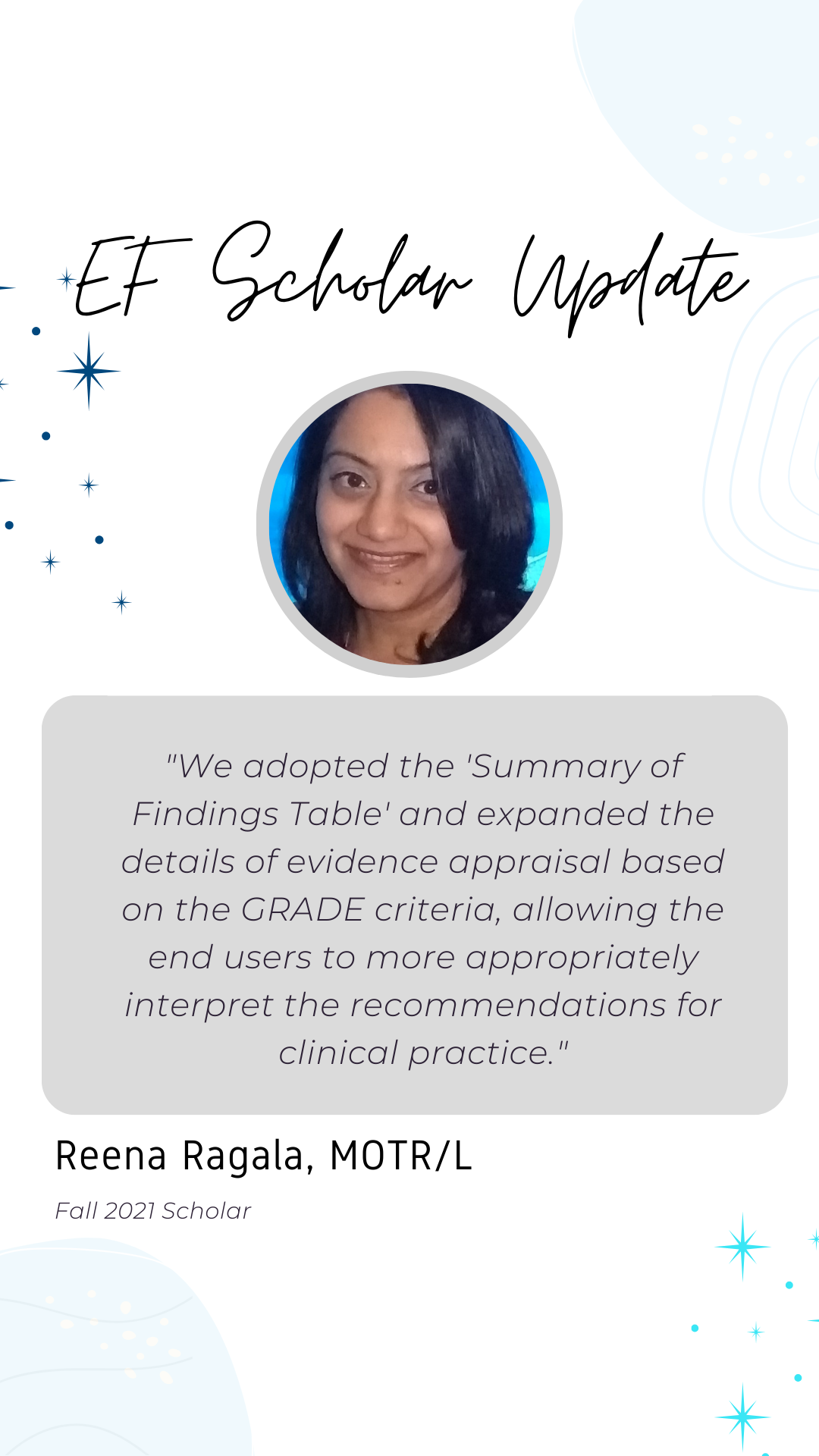
"Since attending the GRADE workshop, I have also worked with colleagues to update the formatting of our evidence brief template. We adopted the 'Summary of Findings Table' and expanded the details of evidence appraisal based on the GRADE criteria, allowing the end users to more appropriately interpret the recommendations for clinical practice."

Saturday, March 5, 2022

U.S. GRADE Network Holds Its First Two-Day Systematic Review Workshop

In response to popular demand, the U.S. GRADE Network recently expanded its half-day course on systematic reviews into a two-day virtual workshop. Taking place over February 1-2, 2022, the sessions comprised six total hours of instructional time and question-and-answer sessions with Network faculty in addition to three hours of hands-on activities in a small-group format. Large-group lectures ranged from developing a focused clinical question to conducting meta-analysis and evaluating the quality of systematic reviews. In hands-on sessions of ten participants each, attendees were introduced to a free online screening platform (Rayyan) and tried their hands at assessing risk of bias and conducting meta-analysis in RevMan, a free systematic review and meta-analysis software from Cochrane.

As part of the program, the Evidence Foundation welcomed three recipients of scholarships to attend the workshop free of charge. As part of their applications, the scholars described a current or proposed project for a systematic review. The three recipients, along with their projects, included:
• Bryden Giving, MAOT, OTR/L (Boston University): A traffic light of evidence for occupational therapy interventions supporting autistic children and youth
• Nirjhar Ruth Ghosh, MS (Texas A&M University): Evidence-based practice in the field of nutrition: A systematic review of knowledge, skills, attitudes, behaviors and teaching strategies
• Milton A. Romero-Robles (Universidad Nacional del Santa): Participation, involvement and main barriers in the inclusion of patients with non-communicable diseases in the development of clinical practice guidelines: A systematic review protocol


Be the first to hear about these and other trainings @USGRADEnet on twitter or at www.systematicreview.org.

Note: applications for scholarships to attend the upcoming GRADE Guideline Development Workshop held July 29-July, 2022, in Chicago, Illinois, close March 31. See application details here.


Monday, December 20, 2021

2021 Reflections Before a Big Year Ahead

 From all of us at the U.S. GRADE Network, thanks for making 2021 a year to remember.

  • We hosted our 14th and 15th workshops virtually - meaning we had the joy of talking GRADE with 95 attendees from many corners of the world, including Spain, Argentina, Pakistan, and Peru.
  • We co-published an international needs assessment of guideline-producing organizations in collaboration with the Guidelines International Network.
  • We announced our first ever two-day comprehensive systematic review workshop scheduled to be held virtually this coming February 1-2. Learn more and register here.
  • And we continue to look forward to hosting our 16th guideline development workshop, once again live and in person, from June 29-July 1, 2022, in Chicago, Illinois. Registration now open.

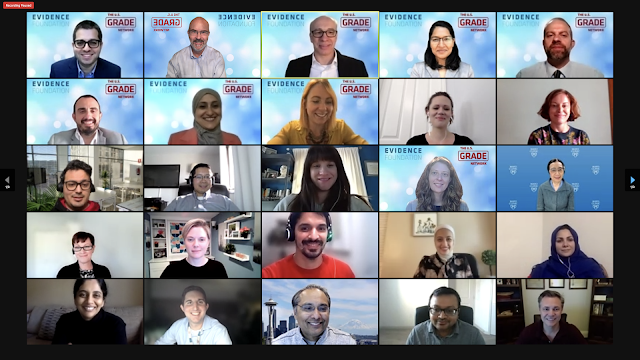
GRADE faculty take a moment to pose for a picture with some attendees of the fall 2021 virtual guideline development workshop.

Stay tuned for more.

To stay up-to-date on all future news, events, and research round-ups from us, make sure to follow us on Facebook, twitter, and LinkedIn.

Thanks again for an excellent year, and our best and brightest wishes for a brilliant 2022.


Friday, June 25, 2021

Scholars at 14th GRADE Workshop Discuss the Unique Challenges of Sparse Evidence, Guideline Collaborations, and Financial Incentives in Healthcare

During the 14th GRADE Guideline Development Workshop held virtually last month, the Evidence Foundation had the pleasure of welcoming three new scholars with the opportunity to attend the workshop free of charge. As part of the scholarship, each recipient presented to the workshop attendees about their current or proposed project related to evidence-based medicine and reducing bias in healthcare.

This spring's lot of three scholars was nothing short of incredibly impressive. Ifeoluwa Babatunde, a PhD student in clinical research at Case Western Reserve University, discussed the unique challenges of developing a guideline on the management of patients undergoing patent foramen ovale (PFO) closure for the Society for Cardiovascular Angiography and Interventions (SCAI). The synthesis of evidence for this question is hampered by controversies and limited evidence as well as complications due to comorbidities and age differences in the populations of interest. Babatunde discussed her interest in attending the workshop to learn more about the appropriate use of observational and indirect evidence to better answer questions related to PFO closure.

"The GRADE workshop helped me to see systematic review methodology from a deeper and more critical perspective," said Babatunde. "GRADE offers a very comprehensive yet succinct and transparent framework for developing and ascertaining the certainty of evidence in guidelines. Hence I feel better equipped to tackle challenges that arise from creating reviews and guidelines regarding conditions and populations with sparse RCTs."


Next, Dr. Pichamol Jirapinyo, the Director of Bariatric Endoscopy Fellowship at Brigham and Women's Hospital and instructor at Harvard Medical School, discussed her work on an international joint guideline development effort between the American Society for Gastrointestinal Endoscopy (ASGE) and the European Society of Gastrointestinal Endoscopy (ESGE) to produce recommendations for endoscopic and bariatric metabolic therapy (EBMT) in patients with obesity. EBMT is one of several possible management routes for obesity, alongside pharmacological and surgical options. The project will aim to answer several questions, including how patients should be managed before and after EBMT, and regarding the safety and efficacy of both gastric and small bowel EBMT.

“The GRADE workshop provided me a great framework on how to apply GRADE methodology to systematic review and meta-analysis to rigorously develop a guideline," said Dr. Jirapinyo. 'In addition to learning about the GRADE methodology itself, I found the workshop to be tremendously helpful with providing practical tips on how to run a guideline task force successfully and efficiently.”  

Finally, Dr. Lillian Lai, a research fellow in the Department of Urology at the University of Michigan, presented an intriguing discussion of financial incentives in clinical decision-making in urology. The surveillance and management of localized prostate cancer, for instance, has several different options ranging from active surveillance (which is less costly) to prostatectomy (which is more costly). Regardless of the reported health outcomes of these approaches, there is little financial incentive to conduct surveillance as opposed to surgery. The project's goal is to use health services research methods to understand how urologists response to large financial incentives, and then create financial incentives and remove financial disincentives for the promotion of guideline-concordant practices. 

"I gained invaluable knowledge on how to use the GRADE approach to rate the certainty of evidence and strength of recommendations," said Dr. Lai. "Going through the guideline development tool with experts in small groups was particularly useful for me to understand what a guideline recommendation means and entails. This workshop came at a critical time in the backdrop of COVID, and the ever-changing landscape of medicine where patients and providers need to make timely and informed decisions together."

If you are interested in learning more about GRADE and attending the workshop as a scholarship recipient, applications for our upcoming virtual workshop in October are now open. The deadline to apply is July 31, 2021. Details can be found here. 

Wednesday, June 9, 2021

Evidence Foundation scholar spotlight: Georgios Schoretsanitis

Last fall, Dr. Georgios Schoretsanitis attended the 13th (and first-ever virtual) GRADE guideline development workshop as a scholar of the Evidence Foundation. As such, he presented to the rest of the workshop attendees on his work developing guidelines for therapeutic drug monitoring to optimize and tailor treatment for psychotherapeutic medications. Beginning in 2017, a series of recommendations for reference ranges for two commonly prescribed antipsychotic medications was developed, followed this year by an international joint consensus statement on blood levels to optimize antipsychotic treatment in clinical practice.

Dr. Schoretsanitis now has an exciting update on his project.

"My main research interest is therapeutic drug monitoring, also known as TDM, which refers to the quantification and interpretation of medication levels in the blood (plasma or serum) of the patient treated with psychotropic agents," says Dr. Schoretsanitis. "The aim of TDM in clinical practice is to improve treatment response and safety outcomes. Apart from analyzing TDM clinical routine data, I have also been working as a member of the TDM taskforce of the German Association of Neuropsychopharmacology and Phaarmacopsychiatry (Arbeitsgemeinschaft für Neuropsychopharmakologie und Pharmacopsychiatrie; AGNP) involved in systematic reviews of TDM literature, which provide so-called therapeutic reference ranges for medication levels. These ranges may orient clinicians during dose selection. Attending the virtual GRADE workshop in October 2020 provided me much of inspiration, but also knowledge of well-established methodological tools for the assessment of quality of evidence.

Hereafter, in the TDM task force of AGNP, we adopted a GRADE-oriented approach in assessing TDM literature as we are reviewing new TDM evidence on commonly prescribed antipsychotics under the supervision of Prof. Gerhard Gründer, Department of Molecular Neuroimaging, Central Institute of Mental Health, Medical Faculty Mannheim, University of Heidelberg, Mannheim, Germany. This type of approach is more standardized and follows GRADE guidelines. Ultimately, this work will enhance methodological rigidity for the next Consensus guidelines for therapeutic drug monitoring in neuropsychopharmacology [last update 2018; Hiemke et al, Pharmacopsychiatry]. I strongly encourage researchers involved in systematic reviews or assessment of evidence quality to attend the GRADE workshop which enables a major upgrade of related skills and knowledge."


Stay tuned for future updates from other past Evidence Foundation scholars like Dr. Schoretsanitis and the exciting work they are doing to improve the application of GRADE methodology and evidence-based medicine.

If you are interested in learning more about GRADE and attending the workshop as a scholarship recipient, applications for our upcoming virtual workshop in October are now open. The deadline to apply is July 31, 2021. Details can be found here. 


Monday, November 16, 2020

Evidence Foundation Welcomes Four Scholars in First Virtual Workshop

In late October, the U.S. Grade Network held its thirteenth GRADE Guideline Development Workshop. Like any of the twelve workshops before it, there was much learning, discussion, and networking to be shared. However, unlike any workshop in the past, it was fully online.

Among the 45 attendees who participated in offices and living rooms from Brazil to Cyprus were four participants who attended the workshop free of charge as recipients of the Evidence Foundation scholarship. During a virtual Evening with the Fall 2020 Evidence Foundation Scholars, these four bright minds presented briefly on a proposal or current project designed to reduce bias in healthcare.

Dr. Stavros Antoniou, Chair of the European Association for Endoscopic Surgery Guidelines Subcommittee, discussed the tripartite Guideline Assessment Project (GAP) aimed at developing an extension of the AGREE II tool for surgical guidelines. In an exploratory analysis published earlier in 2018 (GAP I), Antoniou and colleagues assessed 67 surgical guidelines and reported that development of more than one guideline per year, the presence of a guideline committee, and the use of GRADE was associated with higher scores in AGREE II. Second, the group explored the reliability, internal consistency, and unidimensionality of the AGREE II tool when applied to surgical guidelines (GAP II). The group is now in the process of using the Delphi process to identify and finalize items for the surgical extension based on stakeholder input, pilot-testing the instrument, and assessing its validity (GAP III). Of the workshop. Dr. Antoniou noted, "participating in the GRADE Guideline Workshop as a scholar was an inspirational experience. It was fascinating to be trained by world-renowned experts, who have embraced us with true interest and conveyed their passion with quality in guideline development."

Jung Min Han, PharmD, MS, manages the development of guidelines for the American Academy of Dermatology. Her presentation reviewed her current project to update the organization's 2016 guidelines on the management of acne vulgaris using the GRADE framework. Ms. Han discussed the plan to organize two working groups, one to review and update the nine clinical questions from the previous guidelines, and the other to add additional new questions as needed. An updated search would then be run for the first set of questions to identify any newly published evidence since the original guidelines were developed; simultaneously, a novel systematic search would be conducted for the second group of questions. New recommendations would then be drafted following the GRADE methodology. Ms. Han stated, "The GRADE Workshop has trained me to confidently use GRADE in different scenarios where head-to-head data from randomized controlled trials are not available. The workshop was very well-structured with a concrete theme and a mix of lectures, small and large group discussions, meet the experts Q&A sessions, and real-world examples that challenged trainees in many ways."

Dr. Georgios Schoretsanitis of Zucker Hillside Hospital in Glen Oaks, New York presented on his work developing guidelines for therapeutic drug monitoring to optimize and tailor treatment for psychotherapeutic medications. Beginning in 2017, a series of recommendations for reference ranges for two commonly prescribed antipsychotic medications was developed, followed this year by an international joint consensus statement on blood levels to optimize antipsychotic treatment in clinical practice. "For long I have been interested in conducting systematic reviews and meta-analyses," said Dr. Schoretsanitis. "Attending the GRADE Guideline Workshop organized by the US GRADE Network gave me exactly what I was looking for: a unique chance to essentially deepen my knowledge on major methodological aspects during stimulating lectures by experts that have set the tone in the field. It was an intense experience far beyond acquiring knowledge, which I highly suggest to every methodologist."

Dr. Zeinab Hosseini, a Saskatchewan Health Research post-doctoral fellow at the University of Saskatchewan, discussed her work examining the impact of exercise interventions on osteoporosis. Because gender and sex affect the prognosis and management of the disease, guidelines that consider these differences are needed, she said. As part of her research under the advisement of Dr. Phil Chilibeck, she hopes to contribute further understanding in the field related to gender- and sex-specific considerations for exercise recommendations in patients with osteoporosis, and to help inform future guideline recommendations on this topic. "The US GRADE Network Workshop was an amazing opportunity for me as a post-doctoral fellow in health proving insight on how to think as a health researcher from early stages of research up to knowledge translation and dissemination and how to provide evidence-based recommendations to inform the public considering situations where the literature is scarce," said Dr. Hosseini. "There are top women and men scientists on the training panel who respond to questions using their experiences as member on different panels, which I think is unique."

The USGN facilitators pose for a virtual group photo with the four fall 2020 Evidence Foundation scholars. Click to enlarge.

The Evidence Foundation thanks all four scholars for attending and contributing their engagement and expertise to our 2020 fall workshop.

If interested in applying for a scholarship to future GRADE workshops, more details can be found here: https://evidencefoundation.org/scholarships.html. Please note the deadline for applications to our next workshop in Chicago, Illinois will be February 28, 2021.


Monday, April 20, 2020

Spring 2020 - Scholarship Recipients

Earlier this month, the U.S. GRADE Network welcomed 51 participants to the Twelfth GRADE Guideline Workshop in sunny Phoenix, Arizona. Two participants, Giulia Lane and Hayley Dunnack, were awarded a scholarship from the Evidence Foundation that covered their workshop registration fee. As the two latest additions in a line of over 40 Foundation scholars since 2014, Lane and Dunnack presented to their fellow participants about their projects related to improving the use of evidence-based decision-making in healthcare.


Hayley Dunnack, left, and Giulia Lane, right, were the recipients of the Evidence Foundation scholarship for the spring 2020 GRADE workshop held in Phoenix, AZ

Hayley Dunnack: Opportunities and Challenges in Guidelines for Nursing Practice

Hayley Dunnack, BSN, CMS-RN, OCN is a PhD candidate at the University of Connecticut School of Nursing. Dunnack presented on her work with the Oncology Nursing Society (ONS) to develop guidelines on symptom management for patients with cancer. Currently, ONS has several projects underway to develop guidelines on symptom management based on systematic reviews of the evidence and using GRADE guideline methodology. A current challenge in the ONS’ guideline development relates to the development of guidelines on topics for which randomized studies are sparse or difficult to conduct, such as the management of hypersensitivity reactions or the use of vascular access devices.  Dunnack’s project aims to examine the use of non-randomized and “real-world” evidence to inform the development of rigorous guidelines based on systematic reviews and using the GRADE process.

“I had an incredible experience at the GRADE Guideline Development Workshop,” said Dunnack. “From the didactic material to the small group sessions, there was so much to learn. The ability to network with other professionals and hear their viewpoints added immensely to the experience."


Dunnack and Lane pose with Dr. Shahnaz Sultan of the U.S. GRADE Network

Giulia Lane: Shared Decision-Making in Urology Guidelines

Dr. Giulia Lane is a urology fellow at the University of Michigan. Lane’s project examines the current uptake and opportunities for improvement in the use of shared decision-making aids in the field of urology. Although shared decision-making aids are a critical step of assessing patients’ values and preferences, Lane explained, they are not commonly used in the field of urology. While almost everyone completes the initial step of informing patients about treatment options, exploring individual preferences is less frequent, and of the 29 American Urological Association (AUA) guidelines reviewed by Dr. Lane, only 12 mention shared decision-making at all. Of those guidelines that mentioned shared decision-making by name, only seven (58%) further described the process. Clinicians in urology, Dr. Lane concluded, are not provided support or encouragement to use shared decision-making in their practice. However, this appears to be changing: shared decision-making was mentioned in 2019 guidelines nearly eight times as often as those published in 2010.

In contrast to what is commonly believed, shared decision-making does not take more time once clinicians are trained. Clinicians should consider providing ready-made online modules to patients to review ahead of their visit, further reducing the time required to improve patient engagement and understanding of their treatment options. Dr. Lane’s work provides a baseline assessment of the use of shared decision-making in urology and will help inform the direction of future research in this area.

I felt that the best part of the GRADE workshop was the small-group setting with intimate access to experts in the field,” said Dr. Lane. “The networking opportunities were exceptional and I met several people with whom I plan to collaborate. The people I met at the GRADE workshop and the transfer of ideas were the most important take away point for me.”

If interested in applying for a scholarship to future GRADE workshops, more details can be found here: https://evidencefoundation.org/scholarships.html. Please note the deadline for applications to our next workshop in Chicago, Illinois will be July 31, 2020.

Wednesday, February 26, 2020

Evidence Foundation Scholar Update

Contributed by Janice Tufte, 2019 Evidence Foundation Scholar & Madelin Siedler, 2019/2020 U.S. GRADE Network Research Fellow

Janice Tufte, an independent consultant and a leader in patient-public partnership initiatives, received a scholarship to attend the tenth GRADE guideline development workshop held in Denver, Colorado in February 2019 (blog post here). As part of her scholarship, Tufte presented to the larger workshop group on the unique opportunities of using patient partners during the development of GRADE guidelines.


Spring 2019 scholarship recipients: Dr. Irbaz bin Riaz (L) and Ms. Janice Tufte (R)

Tufte has worked with the American College of Physicians as a public panel member on multiple guidelines in addition to serving as a panel member of their Clinical Guidelines Committee. In these roles, she has provided input on outcomes of importance and on future topics for guideline development and is listed as a co-author on recent guidelines and guidance statements. She has also presented to groups on the basics of guideline development including fellow ambassadors of the Patient-Centers Outcomes Research Institute (PCORI).

Recently, Tufte co-published a protocol for the development of guidance for multi-stakeholder engagement (MuSE) in health and healthcare guideline development and implementation. The forthcoming guidance will be based on four different systematic reviews, including an examination of the current barriers and opportunities for stakeholder involvement in the guideline development process and the effect of stakeholder engagement on resulting guidelines and their implementation. The project will ultimately provide recommendations for ways to improve stakeholder engagement.

Here, Tufte provides an update on her work to continue to promote patient involvement in guideline development, including the use of GRADEpro software for these purposes.
My first exposure to the GRADE process and subsequent utilization of the GRADEpro platform genuinely captured and kept my attention. I quickly realized how beneficial both the Evidence to Decision and Summary Tables could be to public patients involved with systematic reviews, guideline development, and recommendations. I could view the overall landscape and better comprehend the pertinent information and findings in the EtD and Summary table that I needed as a non-scientist, allowing me to contribute more effectively in a meaningful manner in a panel conversation on evidence, recommendations or judgements.

GRADEpro is a versatile and modifiable online format. We are able to create a foundation based on the specificities and needs unique to our individual question that will then display the evidence and quality syntheses in a neat table as well as a reliable summary. Having diverse stakeholders at the table is important. Encouraging all to bring in the public and patient perspective is my particular favorite niche, and I will continue to promote this no matter the topic area.

I have recently enjoyed working with the new GRADEpro extensions while serving on a guidelines panel, where we have incorporated GRADE infographics. One challenge I have discovered is synthesizing the information down to an easy understandable one-pager for both clinicians and public reading.

I am looking forward to working with GRADE in the future, with a goal to better deliver reliable, understandable evidence to all who could benefit.
Stay tuned for future updates regarding Janice’s continued work in promoting patient engagement in guideline development.

If you are interested in learning more about GRADE and attending the workshop as a scholarship recipient, applications for our upcoming workshop in Chicago this October are open. The deadline to apply is July 31, 2020. Details can be found here.

Wednesday, January 16, 2019

Fall 2018 Scholarship Recipients

Contributed by Madelin Siedler, 2018/2019 U.S GRADE Network Research Fellow

We were pleased to support the participation of three research scholars at our recent GRADE guideline development workshop held in Silver Spring, Maryland, October 17-19, 2018. By providing complementary registration, we hope that these scholars increased their understanding and application of the GRADE approach. As part of the U.S. GRADE Network/Evidence Foundation scholarship, recipients presented to fellow workshop participants about their interests and current endeavors in the field of guideline development.

Scholarship recipients: Oilvia Magwood, Mohamad Kalot, and Mohammed Alkhatib


A few details about our Fall 2018 scholarship recipients:

Mohamad Kalot, MD, a postdoctoral research fellow at University of Kansas Medical Center, Kansas City, Kansas, applied for the scholarship due to his interest in improving quality and decreasing disparities in healthcare through the development of evidence-based guidelines. Dr. Kalot presented on his current work in the development of guidelines for the management of rare diseases. Dr. Kalot explained how the development of such guidelines presents a unique challenge in that there is often a dearth of research on these populations, which can affect the directness of evidence among other factors.

“Since an important part of my conducted reviews and research deals with developing guidelines for rare diseases, I would ultimately face specific challenges in the process of assessing the certainty of evidence in my work, and I’m interested in exploring innovative methods to deal with these challenges,” said Kalot. “The GRADE workshop in Silver Spring didn’t only help me find solutions for my challenges, it made me see the research methodology world from a different, deeper and more practical perspective - especially with the very helpful tools [RevMan and GRADEpro Guideline Development Tool] that we learned about in the small groups sessions and the discussions about rating up and rating down the quality of evidence.”

Olivia Magwood, MPH, attended from the Buyere Research Institute in Ottawa, Ontario, where she has participated in the development of three national and international guidelines. Ms. Magwood presented on the development of the FACE (Feasibility, Acceptability, Cost, and Equity) Framework Stakeholder Survey. The FACE Stakeholder Survey aims to identify cognitive bias that may influence guideline development as well as inform the quality and impact and improve the uptake of evidence-based recommendations in various stakeholder groups.

“For me, the GRADE workshop highlighted the importance of building my network and having the right people on your team throughout the guideline development process,” explained Magwood. “This includes involving methodologists early and throughout guideline development, as well as emphasizing patient perspectives, especially while deciding on patient-important outcomes. Guideline development is truly a collaborative process that benefits from multi-stakeholder engagement.”

Mohammed Alkhatib, MD, a postdoctoral research fellow at University of Kansas Medical Center, Kansas City, Kansas, applied for the scholarship due to his interest in examining and refining the adoption, adaptation and de novo development (or “adolopment,” for short) of guidelines to be used in lower-resource settings. Dr. Alkhatib presented on the importance of this approach, as well as the unique challenges of tailoring the development of clinical recommendations to settings with limited resources, such as developing nations and areas of conflict.

“It was an exceptional experience for me to present my proposal in front of high-level scholars of guideline development and to listen to their positive feedback,” said Alkhatib. “[The] GRADE workshop was very helpful for me at the level of interpretation of [systematic reviews] and how to judge strengths and weaknesses using GRADEpro.”

**If interested in applying for a scholarship to future GRADE workshops, more details can be found here: https://evidencefoundation.org/scholarships.html. Please note the deadline for applications to our next workshop in Denver, Colorado will be January 1, 2019.